
Ideal Systems completes successful tests using NDI for remote production with Ministry of Education (MOE) Malaysia
The Ministry of Education (MOE) Malaysia runs a Monthly Assembly officiated by the Education Minister and streamed on EduwebTV. This time round Ideal Systems successfully delivered the Ministry of Education (MOE) Malaysia’s first fully NDI® remote production, switching a multi-camera live programme from a control room 40 km away while maintaining low-latency performance and broadcast-grade reliability. Ideal’s prior proof of concept (POC) with Malaysia’s National Broadcaster (RTM), together with Ideal’s experience in NDI-first reference designs, gave the Ministry of Education (MOE) the confidence to adopt a remote-production workflow as one of the options for EduwebTV’s broadcast production.
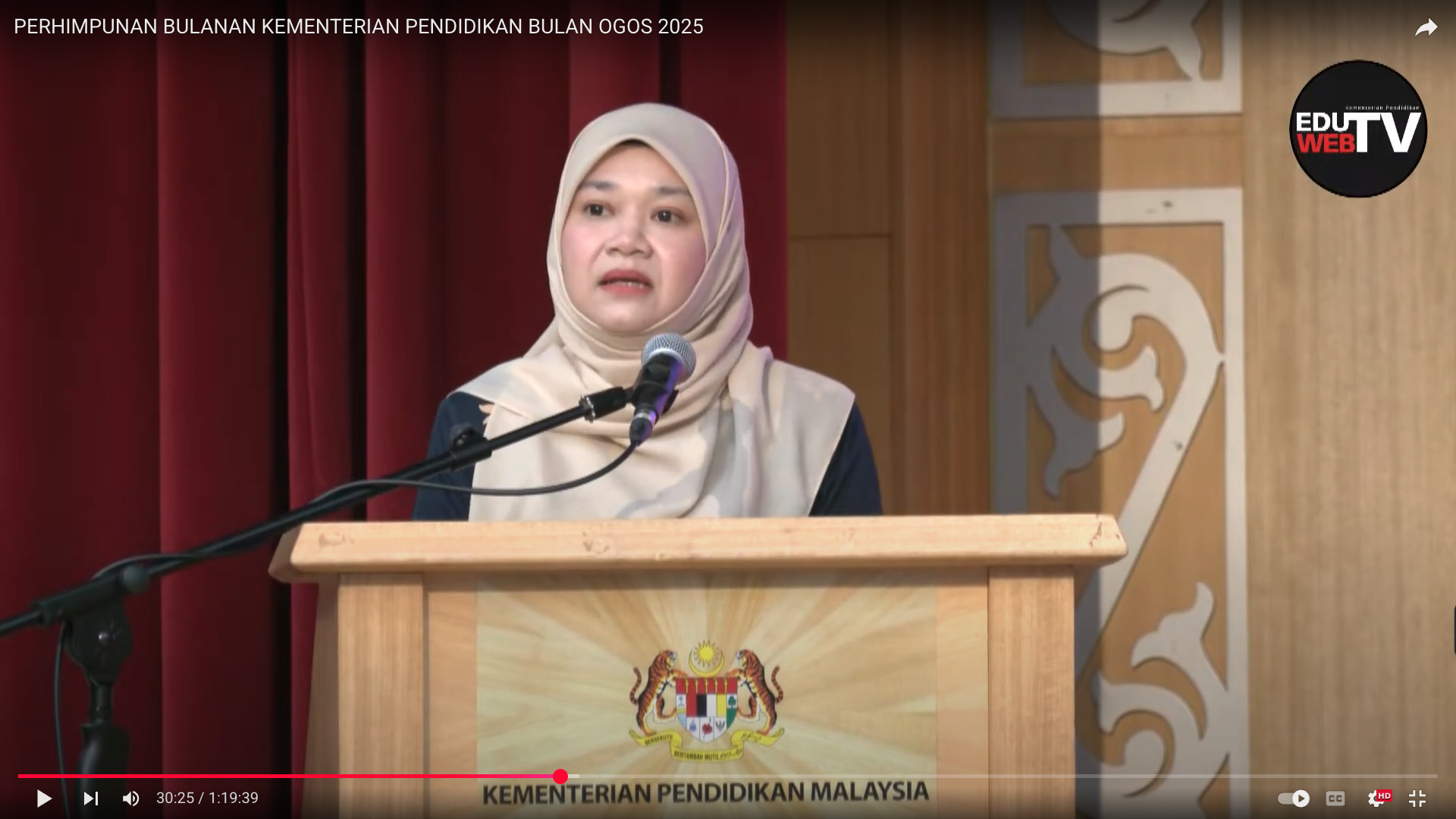
On 27 August 2025, MOE’s Monthly Assembly at the Putrajaya Government Hall was produced from a remote production control room, Studio 3 in Bukit Kiara using an end-to-end IP workflow. The deployment established a proven workflow that MOE can reuse and adjust based on the needs of future assemblies, especially when faced with limited manpower, tight schedules, or events held in areas situated outside Klang Valley, thereby paving the way for MOE to embrace more technology-driven solutions in the future. Ideal Systems provided end-to-end delivery: system design, network planning, on-site setup and configuration, crew training (camera, switching, production), rehearsals, live-day support, and post-event documentation.

“The growing number of program bookings has stretched our staff capacity, creating challenges in meeting production demands. Based on this Proof of Concept (POC), we are confident that NDI technology brings tremendous value to MOE as a practical solution to these challenges. It enables seamless management of back-to-back programs directly from the studio. With its flexibility, scalability, and reliable performance, NDI is a future-ready technology that aligns with the industry’s move towards more efficient and innovative streaming workflows.”
Nuurul Akmal Razali, Head of Technical Production Department,
Bahagian Sumber Teknologi Pendidikan, Ministry of Education

Using NDI technology, remote production has proven to be an effective modern broadcasting method that is flexible, efficient, and capable of supporting large-scale live broadcasts. It reduces costs, simplifies setup, and minimises the amount of equipment required on-site, while integrating easily with production software. The system requires a stable internet connection and team members with knowledge in IP networking to ensure smooth operations. With continuous improvements, this approach has the potential to become the primary solution for broadcasting official ministry events in the future.
Mazlan Ahmad, Technical Producer,
Bahagian Sumber Teknologi Pendidikan, Ministry of Education
Workflow Overview
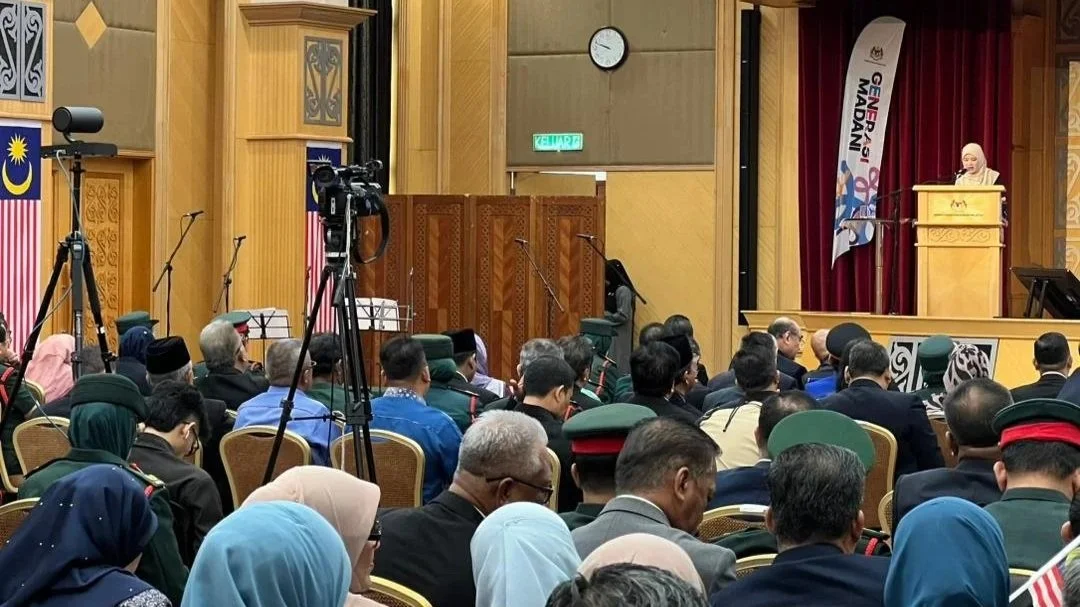

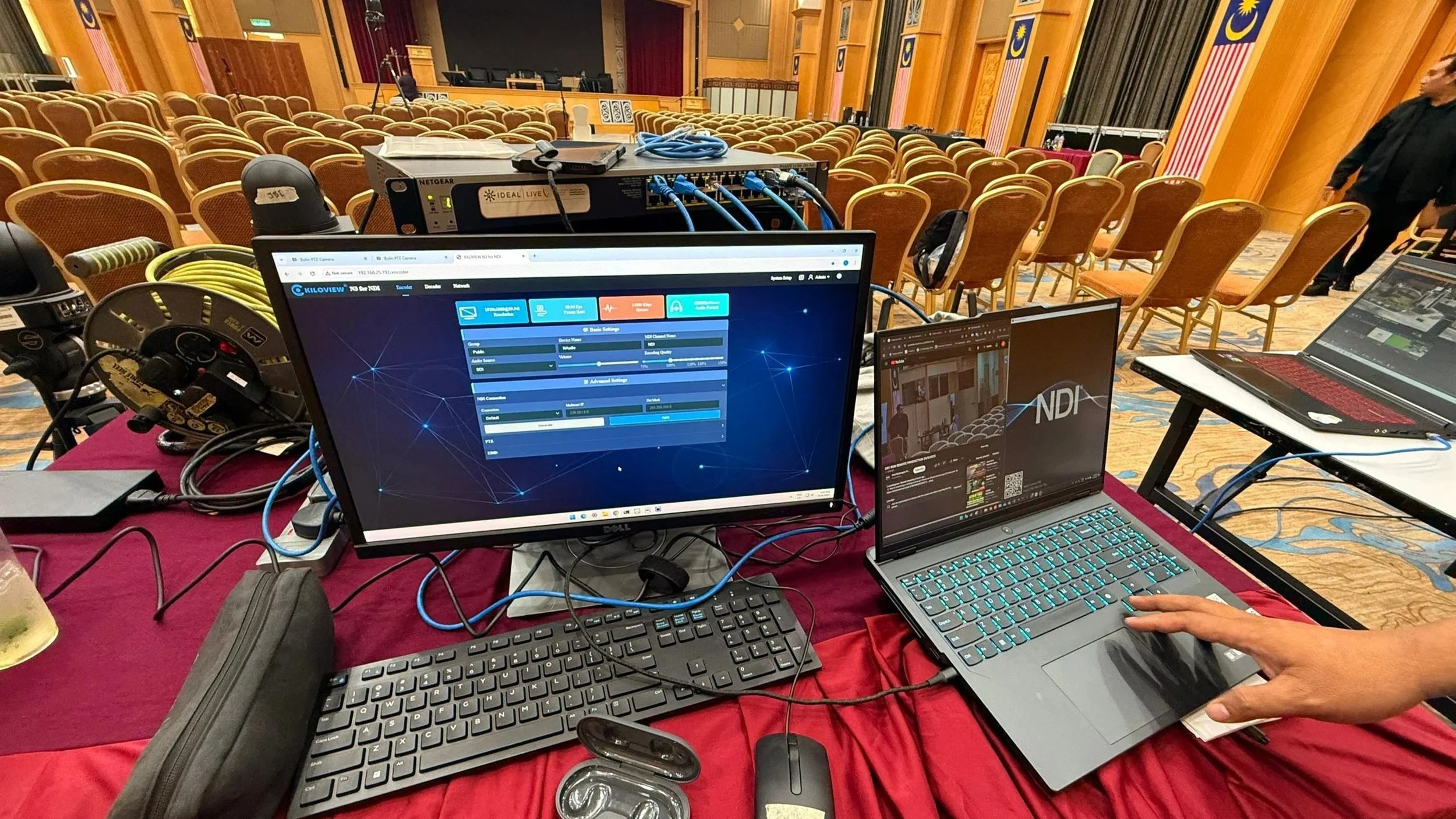
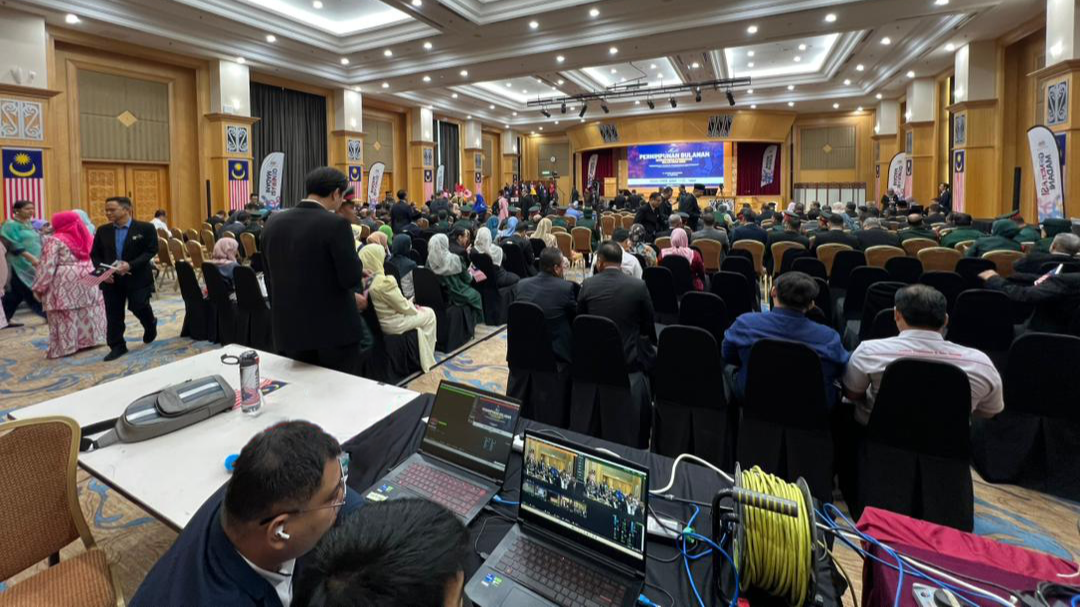
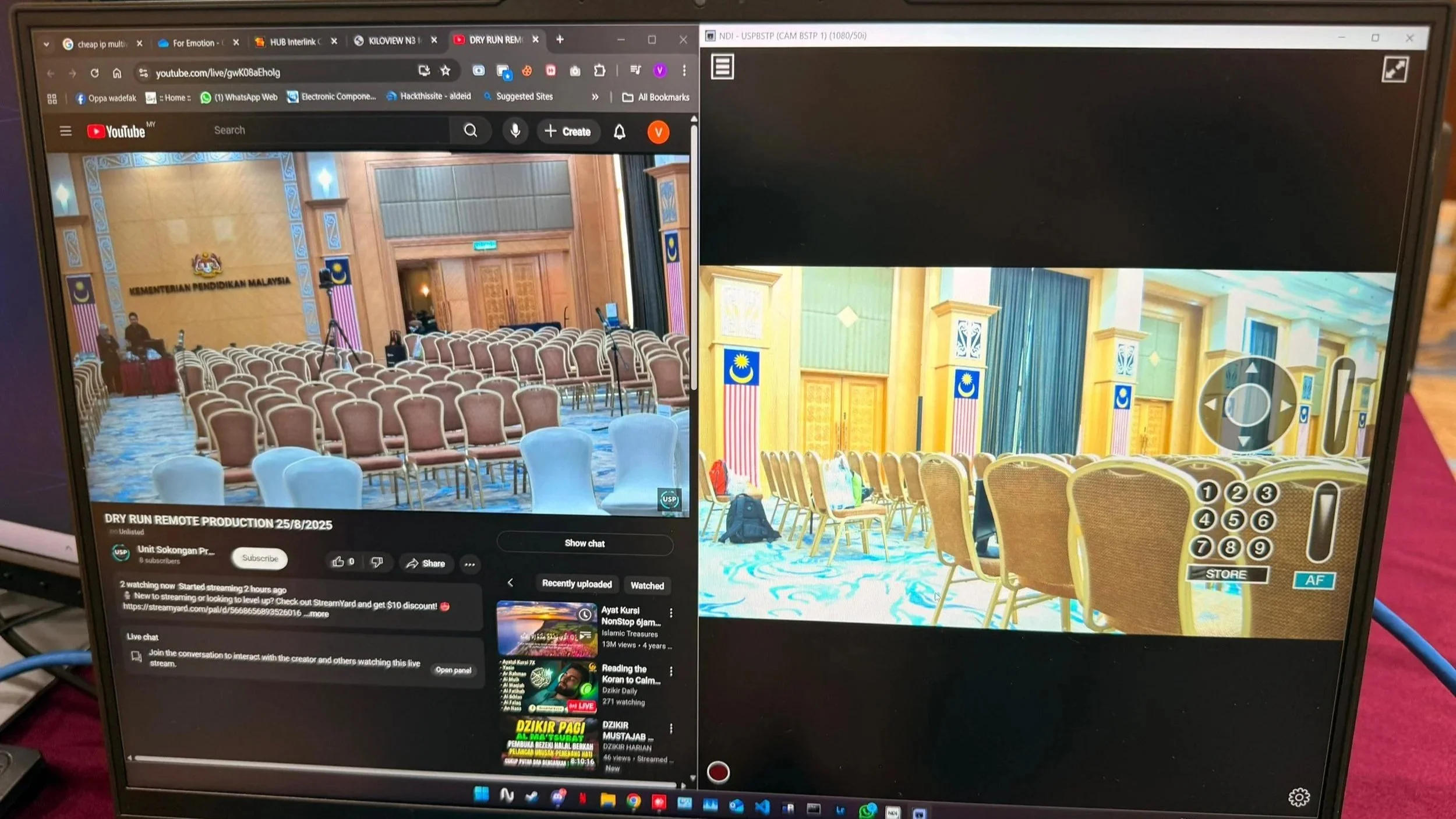
Event Venue - Production Team (Putrajaya - Government Hall):
5 × NDI Cameras (2 × PTZ Bolin, 2 × PTZ BirdDog, 1 × Panasonic ENG)
1 × vMix System – Event Slides (projected to LED wall) via NDI
1 × Audio Output – Master feed from mixer via NDI
Remote Production Control Room - Technical Team with Producer (Bukit Kiara - 40 km away):
1 × TriCaster TC1 Pro (main switcher) – operated by Producer and Switcher, for live switching
Recording/Streaming – Producer overseeing local recording and streaming to YouTube and Facebook
Graphics/Overlays – Technical Team handling Sign Language Interpreter overlay, titles, logos, and lower-thirds
Multiview Monitoring – managed by Technical Team for real-time monitoring of camera feeds, slides, and audio
1 × Camera for sign language interpreter
1 × Audio Mixer/Interface – Technical Team to receive and monitor the NDI Audio output from Event Venue
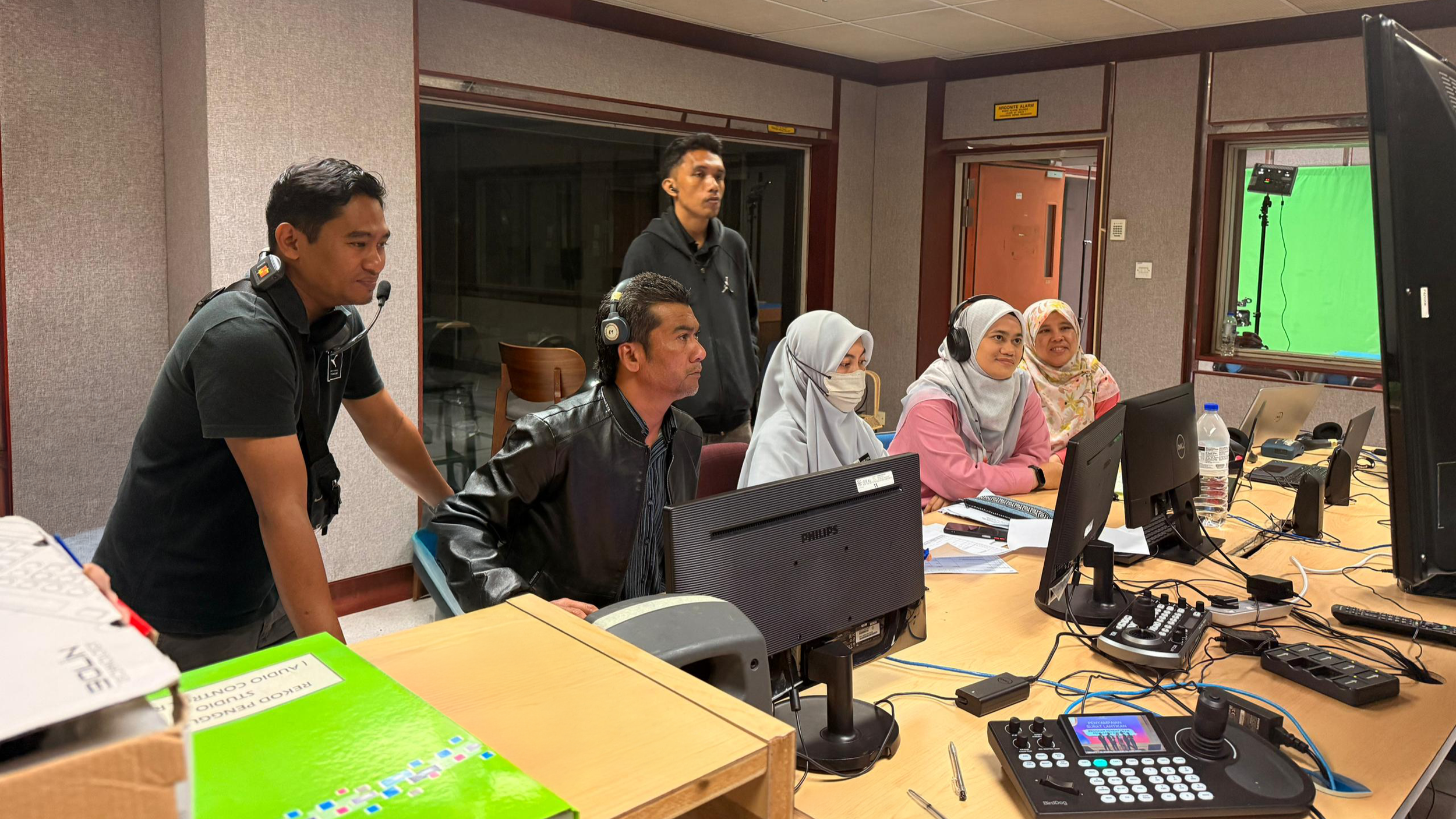
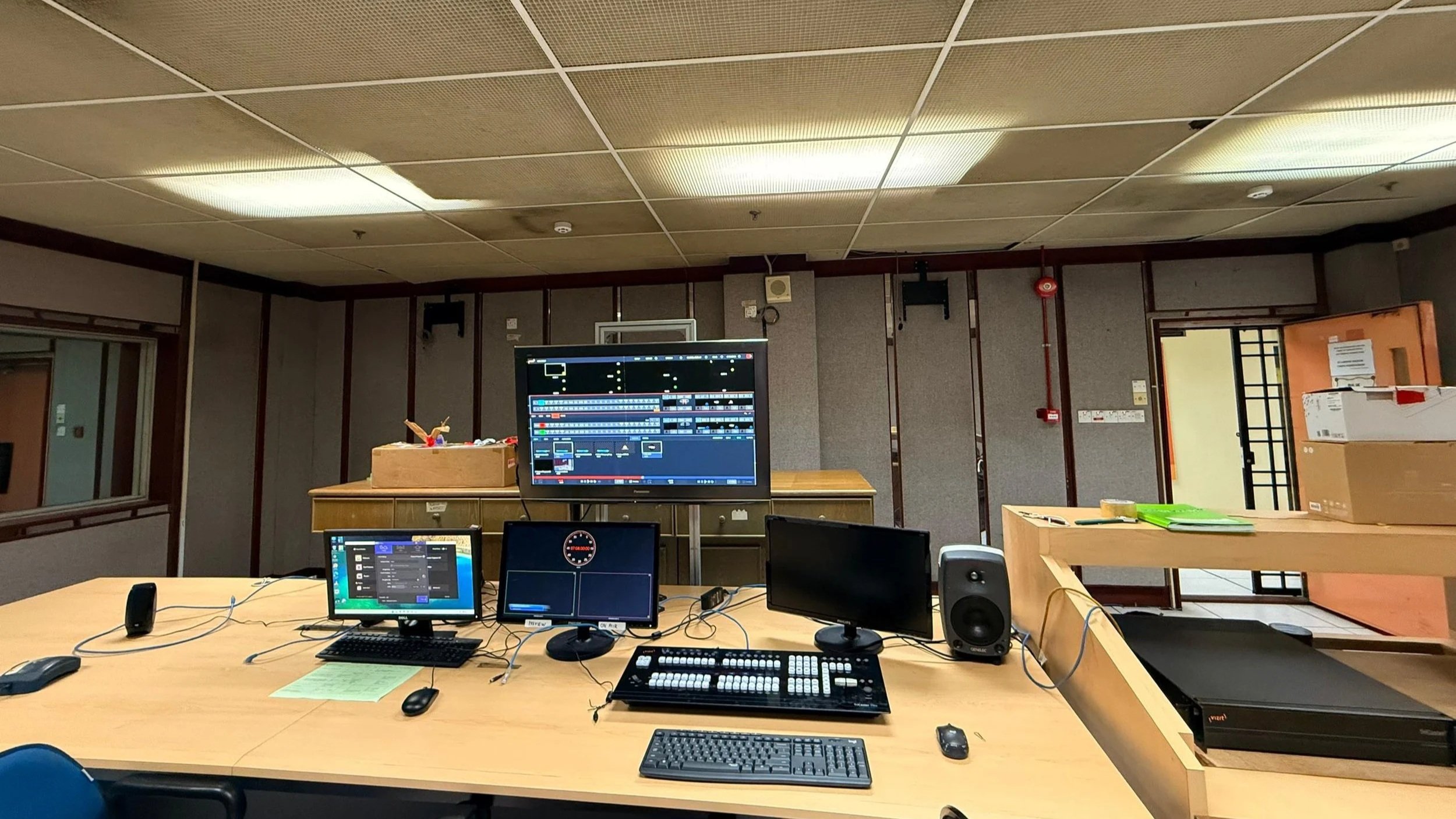
PTZ Controller: operated at the Production Venue (remote site) to control PTZ cameras at the Event Venue via NDI Bridge.
Transmission: NDI Bridge (NDI Tools v6, HEVC ~3.9 Mbps/stream) over dedicated symmetrical 1 Gbps links, switched on NETGEAR S3300 at both sites; operational buffer ~400 ms for <1 s end-to-end latency.
Network Setup: Dedicated high-speed line for NDI Bridge (Version 6) reception, ensuring low latency and stability for both technical and production operations
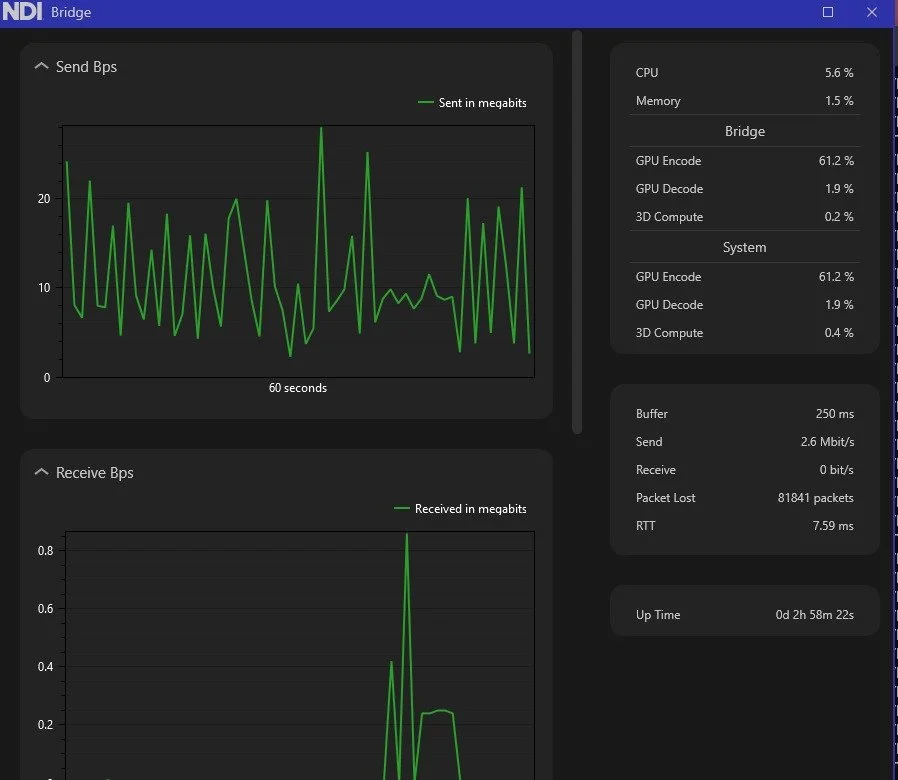
All feeds traversed NDI Bridge (Version 6). Early tests were stable at a 300 ms buffer—until show day traffic inside the government network firewall, security introduced bursty packet loss. Rather than roll back to an on-site switch, IDEAL engineers retuned the NDI Bridge to ~400 ms, held total end-to-end delay under one second, and kept PTZ control responsive.
“We tuned NDI Bridge to ride through venue-side packet loss while keeping delay under a second. PTZ felt natural from 40 km away, and the programme stayed rock-solid.” — Fizzi Kamarul, Technical & Operations Support Engineer
From Bukit Kiara, the producer and switcher used Vizrt TriCaster TC1 Pro to cut five NDI camera feeds (Bolin & BirdDog PTZs plus a Panasonic ENG), layer graphics and a sign-language window, and stream live to YouTube and Facebook. Camera ops received IFB (mix-minus) over NDI and return video on Android devices—so framing, tally, and comms all stayed in sync.

Broadcast MCP Equipment Diagram
“From a technical perspective, this POC proves how NDI simplifies streaming operations by managing the challenge of shortage of on-site crew, speeding up setup time, and maintaining high-quality audio and video. Reliable internet and clear intercom communication are essential for smooth remote production; hence, ensuring stable connectivity and effective communication channels is crucial. Since NDI is a new technology, staff knowledge and skills must also be enhanced through proper training to ensure successful adoption and long-term efficiency.”
Ts. Amirah Jaafar Mad Ariff, Senior Engineer, Multi-Camera Production,
Bahagian Sumber Teknologi Pendidikan, Ministry of Education
Result & Outcome
A smooth, live television programme, with fewer technical crew at the venue and a centralised control-room template, MOE can redeploy monthly at different venues.
Zero feed drops and no packet loss impact on program output; smooth real-time switching
Broadcast reliability with sub-second latency (<1 s) across all NDI sources; feeds stayed in sync with no programme-impacting drops.
Seamless synchronisation of slides, audio, and multi-camera feeds
Slim on-site footprint: one MCP cameraman plus PTZs on tripods; producer/switcher/graphics centralised.
Effective use of IFB and return feed for cameraman and crew communication
A repeatable monthly workflow MOE can deploy at different venues across Malaysia.
Improvements Needed
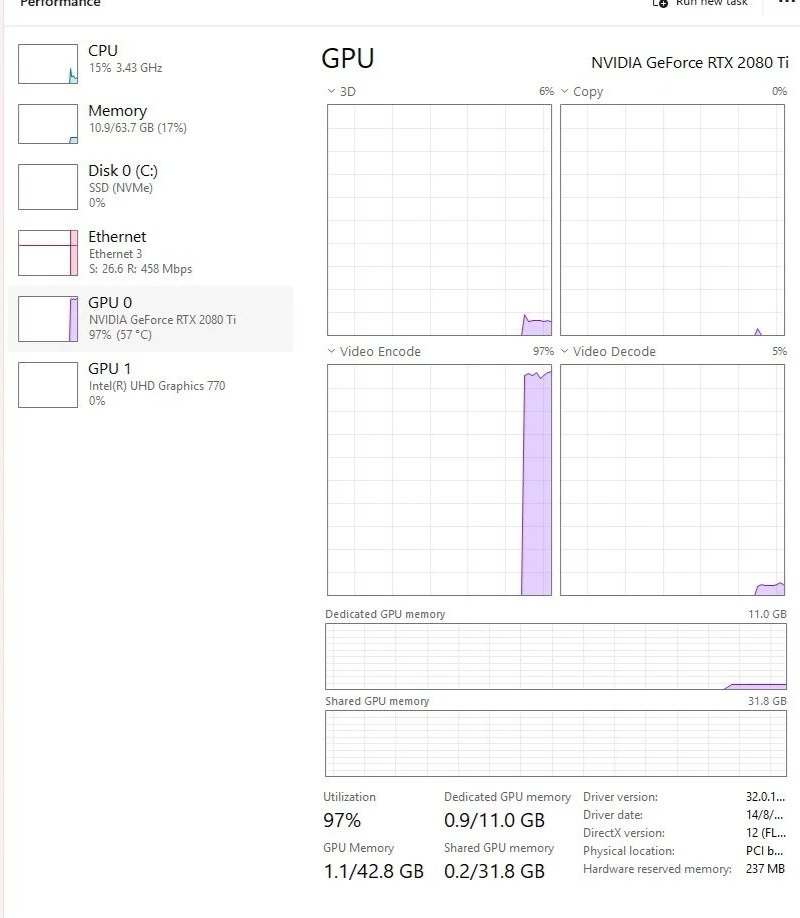
According to Helmi Bin, Project Engineer at Ideal Systems, while the system delivered MOE’s first fully remote NDI® production successfully, scaling for future events will require a more powerful GPU card. With six inputs already in use, GPU utilization exceeded 90%, leaving little headroom for additional camera sources or higher complexity workflows. Addressing this will ensure sustained performance and flexibility as MOE expands its remote production model.