
Intelligent content distribution: Saving Malaysia’s National Broadcaster ( RTM) operational overhead to connect over 400 content suppliers
Figure 1 - Technical COntent DElivery (TCODE) System
TCODE (Technical COntent DElivery) is a centralised digital contribution and workflow orchestration platform developed and implemented for Radio Televisyen Malaysia (RTM), Malaysia national public broadcaster.
Officially operational since 19 May 2026, TCODE was designed to modernise RTM traditional content contribution workflows by replacing fragmented physical delivery processes with a centralised online ecosystem supporting contribution, preview, evaluation, workflow coordination, and content tracking.
The initiative addressed long-standing operational challenges associated with physical media delivery, spreadsheet-based tracking, email coordination, disconnected preview workflows, and repetitive manual operational processes across multiple departments and external contributors.
Developed through close collaboration between RTM and Ideal Systems, the project focused not only on technology deployment but on redesigning how broadcast teams, suppliers, editors, evaluators, and QC personnel collaborate more efficiently within a unified workflow environment.
Today, TCODE serves as the RTM primary technical content contribution platform, supporting approximately 400 content suppliers over a six-month operational cycle, including production houses, syndication partners, government agencies, technical contributors, and independent media suppliers supporting both domestic and international content distribution activities.
More importantly, the project demonstrates how broadcasters can modernise legacy contribution workflows through practical workflow redesign, collaborative systems integration, and operationally aligned digital transformation focused on solving real-day-to-day broadcast workflow challenges.
Project Background
RTM operates one of Malaysia largest public broadcasting environments involving nationwide television operations, multiple operational departments, production houses, content acquisition teams, syndication partners, government agencies, and technical contribution stakeholders.
For many years, RTM contribution workflows depended heavily on physical media delivery processes involving Hard Disk Drives (HDD), XDCAM discs, portable storage devices, and manual hand-delivery to RTM premises.

Figure 2 - Traditional Physical Media (XDCAM and HDD) Delivery Workflow at RTM Operations
Operational teams also relied extensively on:
spreadsheets for asset tracking
email coordination
Google Drive preview links
manual workflow updates
disconnected review processes
repetitive operational follow-ups
Although operationally functional for many years, the workflow environment became increasingly difficult to manage efficiently as contribution volume, operational complexity, and turnaround expectations continued to grow. Operational challenges included:
damaged storage devices during transportation
corrupted or incomplete media files
repetitive amendment and resubmission cycles
fragmented workflow visibility
duplicated operational effort
delayed technical review processes
inefficient coordination between operational teams
delayed contribution turnaround
increased dependency on repetitive manual coordination
One of the major limitations within the workflow environment was the dependency on office-hour-based contribution handling. Missed submission windows frequently resulted in next-day processing delays, while weekend submissions created operational backlog and additional coordination overhead.
At the same time, RTM Creative Content Unit, responsible for evaluating and reviewing acquired and procured content for broadcast suitability and programming requirements, also relied heavily on fragmented operational workflows involving spreadsheets, email coordination, Google Drive sharing, and disconnected preview processes.
This fragmented workflow environment made it increasingly difficult for teams to maintain centralised visibility, consistent asset tracking, and efficient collaboration throughout the contribution and evaluation lifecycle. RTM recognised the need for a more practical, scalable, and collaborative workflow ecosystem capable of supporting modern digital broadcast operations.
Workflow Transformation Vision
In 2024, RTM initiated a six-month pilot project to evaluate a more scalable and operationally aligned approach toward content contribution and workflow coordination. The objective was not simply to digitize file transfer.
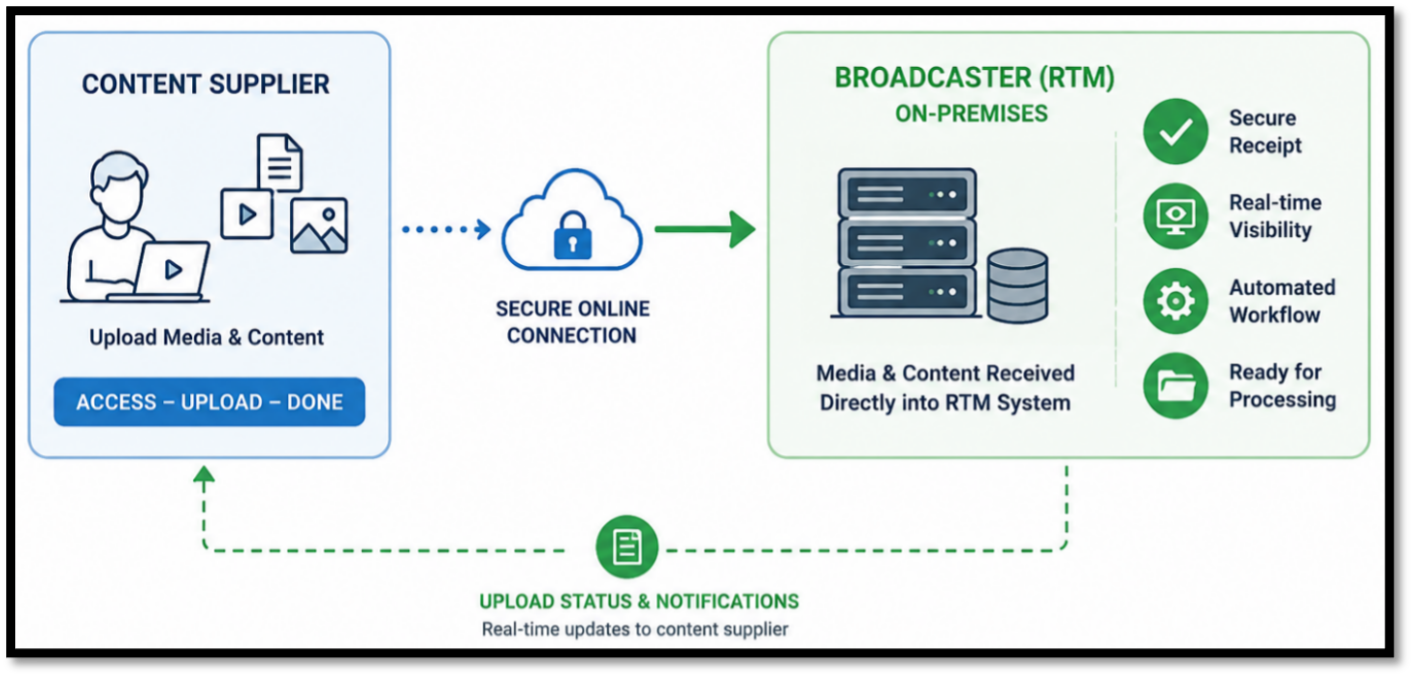
Figure 3 - Overall Design of TCODE Concept
The project focused on redesigning how suppliers, evaluators, editors, QC personnel, and broadcast teams collaborate within a centralised workflow ecosystem. The vision centered around:
reducing dependency on physical media delivery
simplifying contribution coordination
improving workflow visibility
centralising operational tracking
enabling online preview and evaluation
supporting 24/7 contribution capability
improving turnaround efficiency
reducing fragmented manual processes
modernising day-to-day workflow management
To achieve this objective, RTM collaborated closely with Ideal Systems throughout the pilot project lifecycle.
The implementation approach focused heavily on understanding real operational pain points experienced daily by RTM operational teams before translating these requirements into a practical digital workflow environment aligned with RTM operational realities.
Collaborative Ecosystem Approach
The successful implementation of TCODE was driven through close collaboration between RTM, and Ideal Systems.
Beginning from the pilot phase until full operational deployment, the project team worked closely with RTM operational stakeholders to redesign traditional contribution workflows while ensuring the platform remained practical for day-to-day broadcast operations.
Radio Televisyen Malaysia (RTM)

Figure 4 - Workflow Discussion between RTM and Ideal Systems
RTM has provided:
operational workflow requirements
contribution process ownership
evaluation workflow input
operational validation
real-world workflow feedback
broadcast operational expertise
Operational users included:
broadcast operations teams
editors
QC personnel
Creative Content Unit evaluators
scheduling and acquisition personnel
Ideal Systems
As the lead systems integrator and workflow transformation partner, Ideal Systems played a critical role throughout the project lifecycle including:
pilot project implementation
workflow assessment and redesign
infrastructure coordination
systems deployment
workflow engineering
workflow validation
operational optimization
contribution workflow implementation
operational rollout and enablement

Figure 5 - Ideal Systems Role in Modernizing RTM Contribution Operation
Rather than focusing purely on technology deployment, Ideal Systems worked closely with RTM teams to simplify contribution workflows, reduce repetitive coordination, and improve workflow visibility across operational departments.
The collaboration between RTM and Ideal Systems ensured the platform remained scalable, collaborative, and aligned with RTM long-term operational requirements.
Technical Solution and Workflow Architecture
TCODE was developed as a centralised digital workflow ecosystem rather than a standalone upload portal. The platform integrated contribution, workflow orchestration, evaluation, preview, asset tracking, editing coordination, QC verification, workflow notifications, and collaborative review processes into a unified workflow environment.
The implementation was designed to support more than 400 content suppliers over a six-month operational period, including:
production houses
syndication partners
government agencies
technical contributors
independent content suppliers
The ecosystem supports contribution and content distribution activities across Malaysia as well as international syndication workflows involving global contribution and content coordination activities.
To improve workflow visibility and coordination, TCODE incorporates a centralised automated notification framework generating real-time workflow updates throughout the contribution lifecycle.
This significantly reduced the need for repetitive manual coordination between suppliers, editors, evaluators, QC personnel, and broadcast teams.
Beyond contribution workflows, TCODE was also developed as an API-driven orchestration platform capable of integrating with multiple broadcast processing, quality assurance, and content preparation environments. Key workflow capabilities included:
Automated audio loudness verification and correction workflows
Automated quality control verification processes
Content preparation and editing workflow integration
Workflow orchestration and process automation
Centralised workflow visibility and operational coordination
Through API-driven integration, verification, QC processing, editing coordination, validation, and workflow synchronisation activities operate automatically without repetitive manual intervention. The platform also introduced a centralised online preview and evaluation capability.

Figure 6 - Automatic Workflow Operational Process, designed by Ideal Systems
Before TCODE, content evaluation activities often depended on spreadsheets, email coordination, Google Drive links, separate preview workflows, and fragmented asset tracking processes across multiple operational teams. This created duplicated effort, inconsistent visibility, delayed review cycles, and additional workload for teams responsible for contribution coordination and content evaluation.
Through TCODE, contribution, preview, evaluation, workflow tracking, and operational coordination activities are centralised into a single collaborative workflow environment.
Today, submitted content materials can be securely uploaded, previewed, reviewed, tracked, and managed directly through TCODE without dependency on disconnected external platforms or spreadsheet-based tracking processes.
The implementation introduced:
centralised online preview workflows
unified asset tracking
centralized workflow visibility
improved collaboration between teams
faster review and evaluation processes
improved workflow traceability
reduced dependency on fragmented manual coordination
more efficient contribution and acquisition management
The implementation also incorporated:
Reverse Proxy security architecture
Fortinet load balancing and security infrastructure
Telekom Malaysia fiber internet connectivity
Unlike conventional relay-based contribution environments requiring temporary cloud staging workflows, TCODE was designed to support direct contribution into RTM operational environment.
This simplified the workflow significantly while improving contribution efficiency, operational visibility, and turnaround responsiveness.
The workflow philosophy was intentionally simplified:
ACCESS – UPLOAD – DONE
Innovation and Industry Impact
TCODE demonstrates how broadcasters can modernise legacy contribution workflows through practical workflow redesign rather than simply replacing technologies.
Instead of focusing solely on file transfer, the project rethought how suppliers, evaluators, editors, QC personnel, and broadcast teams collaborate within a unified digital ecosystem. The implementation transformed:
physical delivery into online contribution
fragmented coordination into centralised workflow visibility
spreadsheet-based tracking into integrated workflow management
disconnected preview processes into a centralised online evaluation
office-hour dependency into 24/7 contribution capability
Before TCODE, contribution coordination frequently depended on phone calls, email follow-ups, spreadsheet updates, manual asset verification, and disconnected preview links shared across different teams.
This created duplicated effort, inconsistent workflow visibility, delayed review cycles, and additional workload for teams responsible for contribution coordination and content evaluation.
TCODE centralised these activities into a single collaborative workflow environment.
A key innovation within the project was the API-driven orchestration architecture connecting contribution, QC verification, audio compliance, editing workflows, notifications, preview, and evaluation processes within a unified workflow ecosystem.
By combining automated processing, workflow orchestration, centralised visibility, and integrated workflow coordination, RTM significantly reduced repetitive manual processes while improving:
workflow visibility
contribution turnaround
collaboration efficiency
evaluation coordination
workflow scalability
contribution flexibility

Figure 7 - Workflow Processes including API Integration for Audio Loudness and AutoQC
More importantly, the project demonstrates how practical workflow modernisation can help broadcasters simplify real day-to-day workflow challenges rather than introducing additional operational complexity.
Industry Collaboration and Pilot Validation
Throughout the pilot phase, RTM and Ideal Systems collaborated closely with multiple stakeholders across Malaysia broadcast ecosystem to validate workflows, optimise coordination processes, and ensure the platform aligned with real operational requirements. Participating organisations included:
production houses
government agencies
syndication partners
technical contributors
independent media suppliers
Department of Islamic Development Malaysia (JAKIM)
National Film Development Corporation Malaysia (FINAS)
The pilot project was conducted under real operational conditions to ensure the platform aligned with actual broadcast contribution requirements and day-to-day workflow realities.
Stakeholder feedback played a major role in refining workflow usability, coordination efficiency, contribution visibility, and operational practicality before full deployment.
Measurable Results
The six-month pilot implementation demonstrated strong adoption and measurable workflow improvements. Key project outcomes included:
More than 1 Petabyte (PB) of content successfully contributed into RTM infrastructure
Less than 5% contribution error rate
Approximately 400 content suppliers were supported within six months
Contribution ecosystem supporting both domestic and international syndication workflows
Operational feedback during the pilot phase indicated:
90% improved workflow efficiency
95% positive user-friendliness feedback
85% reduction in coordination overhead
80% faster contribution turnaround
90% willingness to continue using the platform
More importantly, operational teams reported:
improved workflow visibility
simplified contribution coordination
faster evaluation processes
reduced dependency on fragmented manual workflows
improved collaboration across departments
Why This Project Matters for Broadcasters
Many broadcasters continue to rely on fragmented contribution workflows involving physical deliveries, disconnected review processes, spreadsheets, email coordination, and manual tracking activities.
TCODE demonstrates how these legacy workflows can be modernised through practical, scalable, and operationally aligned digital transformation.

Figure 8 - The result of workflow modernization
More importantly, the project highlights how successful transformation is not purely technology-driven. It requires close collaboration between broadcasters, workflow specialists, systems integrators, and operational users to ensure the resulting platform solves real day-to-day broadcast workflow challenges.
The project provides a scalable model for how public broadcasters can modernise contribution, evaluation, and content coordination workflows while improving workflow agility, visibility, collaboration, and long-term resilience.
Conclusion
TCODE represents far more than a media contribution platform. It represents a practical transformation of how broadcast teams contribute, evaluate, coordinate, review, and manage content workflows within a modern digital environment.
The project successfully transformed:
physical delivery into online contribution
fragmented workflows into centralised coordination
spreadsheet tracking into unified workflow visibility
disconnected preview processes into a centralised online evaluation
repetitive manual coordination into streamlined collaborative workflows
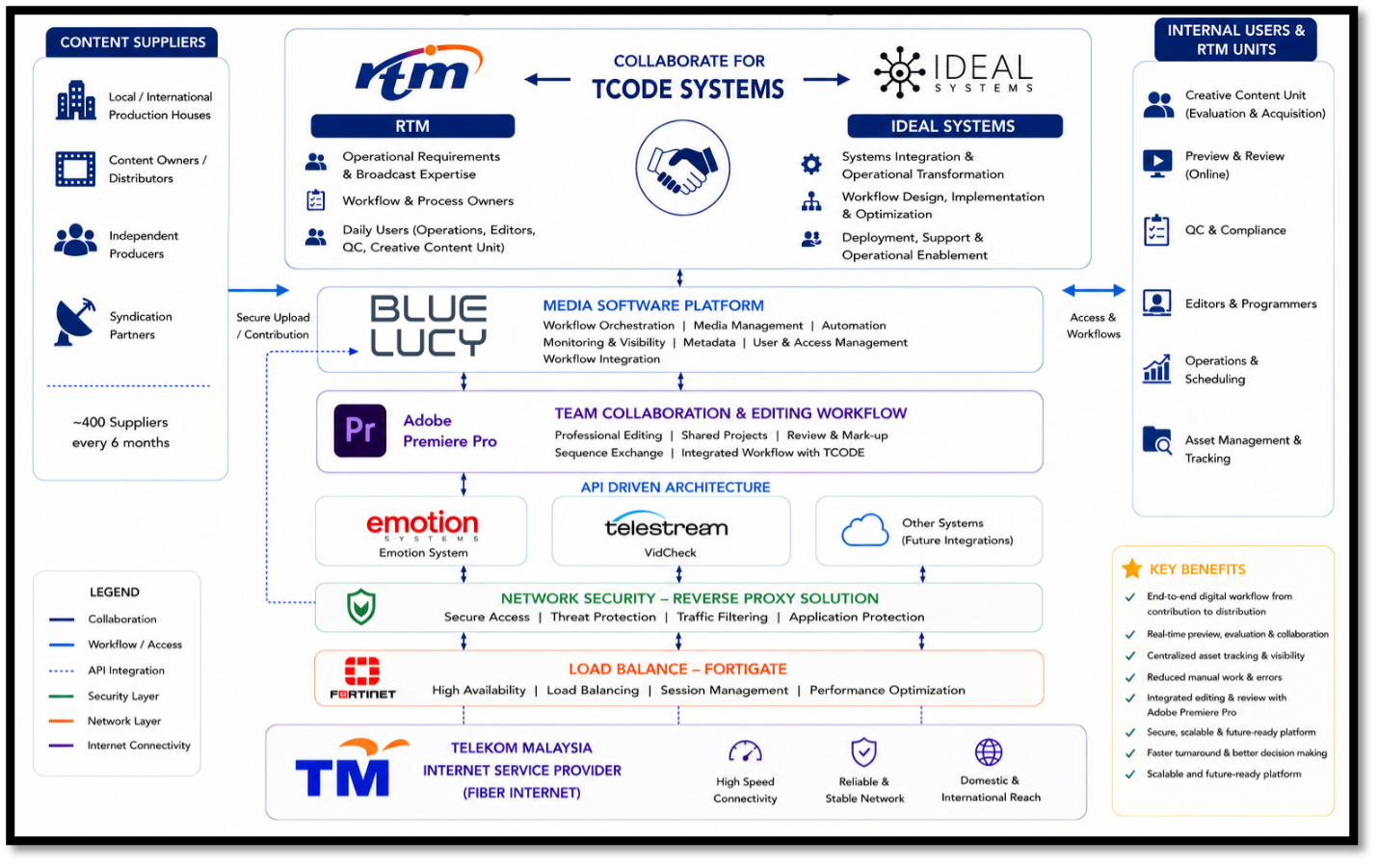
Figure 9 - TCODE Ecosystem
Through close collaboration between RTM and Ideal Systems, the initiative demonstrated how broadcasters, systems integrators, and workflow technology partners can work together to solve real workflow challenges through practical modernisation and operationally aligned digital transformation.
More importantly, the project highlights how modern broadcasters increasingly require workflow ecosystems that are not only technically capable, but collaborative, scalable, operationally practical, and aligned with the realities of day-to-day broadcast operations.